

Tired of Pacific Northwest Winters? The Financial Side of Becoming a Snowbird in Retirement
Tired of Pacific Northwest Winters? The Financial Side of Becoming a Snowbird in Retirement

After decades of gray skies, steady rain, and short winter days, the idea of spending January in the Arizona sunshine can sound pretty appealing. For retirees in Vancouver, Washington, and Portland, Oregon, becoming a snowbird offers an opportunity to enjoy warmer winters without giving up the Pacific Northwest lifestyle they love.
Imagine spending the holidays with family along the Columbia River, then heading south to Scottsdale, Tucson, or Palm Springs until spring returns. Morning walks in the sunshine, afternoons on the golf course, and outdoor dining in February can become part of a new retirement routine.
But what begins as a lifestyle decision can quickly become a significant financial commitment.
Buying a second home or condominium means maintaining two properties, potentially navigating different state tax rules, and ensuring retirement savings can comfortably support the additional expenses.
Before purchasing a winter getaway, it’s worth asking an important question: Can your retirement plan support the snowbird lifestyle for the long haul?
Snowbird Living Is More Popular Than You Might Think
Owning a second home is hardly unusual in the United States, although the reasons for purchasing one vary considerably.
According to estimates from the National Association of Home Builders (NAHB), the United States had approximately 6.2 million second homes in 2024, representing 4.3% of the nation’s housing stock. That was down from approximately 6.5 million in 2022.¹
These figures include vacation properties and other second homes, not exclusively properties owned by retirees. Consequently, they should not be interpreted as the percentage of retirees who maintain two residences.
Arizona remains one of the country’s major second-home destinations. U.S. Census Bureau American Community Survey estimates for 2020–2024 identified approximately 165,168 Arizona housing units designated for seasonal, recreational, or occasional use, representing roughly 5.2% of the state’s housing inventory.²
Arizona’s appeal to retirees is also reflected in its demographics. According to the U.S. Census Bureau, 20.6% of Arizona residents were age 65 or older, and the state’s estimated population reached approximately 7.62 million in July 2025.³
Seasonal residents add another dimension to Arizona’s population. An October 2026 report from ABC15 Arizona described estimates of 800,000 to 1.2 million additional people arriving during the October-to-April snowbird season, although these are reported seasonal estimates rather than an official Census population count.⁴
For Pacific Northwest retirees, the attraction is understandable. Arizona offers relatively mild winters, established retirement communities, golf courses, outdoor recreation, and numerous housing options designed for seasonal living.
However, owning a winter home is different from taking an extended vacation.
Where Are Pacific Northwest Snowbirds Heading?
Arizona is a natural destination for many retirees seeking a seasonal escape, but it’s not the only option.
Scottsdale and the Greater Phoenix Area
Scottsdale attracts retirees interested in golf, dining, cultural attractions, and resort-style communities. Nearby Mesa, Chandler, and Gilbert offer additional housing options, including condominiums, townhomes, and age-restricted communities.
Tucson, Arizona
Surrounded by the Sonoran Desert and mountain ranges, Tucson offers a different pace of life. Its outdoor recreation, arts community, and variety of residential neighborhoods make it worth considering for retirees who prefer a smaller metropolitan environment.
Yuma and Lake Havasu City, Arizona
These communities attract seasonal residents looking for sunshine and recreational opportunities. A 2026 report identified Yuma, Lake Havasu City, and Tucson among Arizona’s notable snowbird destinations.⁴
Palm Springs and the Coachella Valley, California
Palm Springs, Palm Desert, and surrounding communities offer desert scenery, golf, dining, and established seasonal neighborhoods. California’s property taxes, insurance costs, and residency rules deserve careful consideration before purchasing.
Las Vegas and Henderson, Nevada
Southern Nevada offers entertainment, recreation, shopping, and retirement-oriented communities. Nevada’s lack of an individual state income tax can be appealing, although simply purchasing a property there does not automatically change someone’s tax residency.
For retirees in Vancouver or Portland, proximity to airports, healthcare providers, and family connections may be just as important as the climate.
Should You Buy a Second Home or Rent for the Winter?
One of the first financial decisions prospective snowbirds face is whether to purchase a property or rent for several months each year.
Buying can provide a familiar place to return to each winter, the ability to customize the property, and potential long-term appreciation. However, ownership also creates ongoing expenses regardless of how frequently the property is occupied.
Renting offers greater flexibility. Retirees can explore different communities, change their travel schedules, and avoid many of the responsibilities associated with property ownership.
Consider the following hypothetical example.
|
Expense |
Buying a Winter Condo |
Renting for Four Months |
|
Property purchase |
$400,000 |
None |
|
Property taxes |
$2,400 annually |
Included in rent |
|
HOA fees |
$4,800 annually |
Typically included |
|
Insurance |
$1,800 annually |
Renter coverage may apply |
|
Utilities and maintenance |
$3,000 annually |
Varies by lease |
|
Seasonal rent |
None |
$12,000–$16,000 |
|
Capital committed |
Substantial |
Limited |
Illustrative figures only. Actual costs vary by property, location, financing, insurance, and rental market. The ownership example excludes mortgage interest, closing costs, selling expenses, and the opportunity cost of invested capital.
At first glance, owning a condominium might appear comparable to renting. But the financial picture changes when considering the $400,000 committed to the property.
That money may otherwise have remained invested, provided retirement income, or served as a reserve for healthcare and unexpected expenses.
Additionally, property values can decline, condominium associations can impose special assessments, and maintenance costs may rise over time.
The better financial choice depends on how frequently the property will be used, how long the snowbird lifestyle will continue, and how the purchase affects the overall retirement plan.
Can Your Retirement Savings Support Two Homes?
For retirees with substantial investment portfolios, purchasing a winter residence may be financially manageable. Nevertheless, the decision should be evaluated alongside retirement income needs and long-term spending expectations.
Consider a hypothetical Vancouver couple with:
- $1.5 million in retirement and investment accounts.
- A mortgage-free primary residence in Washington.
- Combined Social Security benefits of $60,000 annually.
- A desire to purchase a $400,000 condominium in Arizona.
If they withdraw the entire purchase price from their investment portfolio, their remaining investments would decline to approximately $1.1 million before accounting for taxes and transaction expenses.
That’s a reduction of nearly 27% in their original investment portfolio.
If the withdrawal comes from traditional IRA or 401(k) accounts, it could also create substantial taxable income in the year of purchase.
Alternatively, financing the property might preserve invested assets but introduce mortgage payments and interest expenses.
The couple must also consider the ongoing costs of operating two homes.
Property taxes, utilities, insurance, HOA fees, maintenance, transportation, and travel expenses could add thousands of dollars to their annual retirement budget.
For this reason, the decision isn’t simply whether someone can afford to buy a second property.
It’s whether they can maintain the lifestyle without jeopardizing retirement income, investment flexibility, or future financial needs.
The Tax Considerations of Living in Two States
For Pacific Northwest snowbirds, state income taxes can be one of the most consequential planning considerations.
Washington and Oregon have substantially different tax structures, and owning property in another state can introduce additional complications.
Oregon Residents: Buying in Arizona Doesn’t Automatically Change Your Residency
Oregon generally taxes residents on income from all sources, subject to applicable exclusions and credits.
The Oregon Department of Revenue explains that residency depends on factors such as where someone considers their permanent home, where their financial and family life is centered, and where they intend to return after being away. Oregon also has a statutory residency rule involving maintaining a residence and spending more than 200 days in the state, subject to applicable exceptions.⁵
An Oregon retiree who purchases a condominium in Scottsdale and spends four months there each winter may still be considered an Oregon resident for income tax purposes.
Changing domicile involves more than buying property or obtaining an out-of-state mailing address.
Retirees should evaluate their actual living arrangements, family ties, financial connections, and the residency rules of both states before assuming a move will change their tax obligations.
Washington Residents: A Different Starting Point
Washington does not impose a broad-based individual income tax, although certain capital gains may be subject to Washington’s capital gains excise tax.
Washington retirees considering an Arizona winter home should evaluate whether their activities or income could create tax obligations in Arizona, along with property taxes and other ownership costs.
Maintaining homes in two states can also complicate estate planning, particularly when real property is involved.
State-specific tax and legal advice is important before making decisions based on anticipated tax savings.
Don’t Overlook Healthcare and Medicare Coverage
Healthcare is another important consideration for retirees who plan to spend several months away from home.
Original Medicare generally provides access to participating providers throughout the United States, while Medicare Advantage plans commonly use service areas and provider networks that can affect nonemergency care outside a retiree’s home region.
For someone who receives most of their medical care in Portland or Vancouver, spending several months in Arizona may require additional coordination.
Before committing to seasonal living, retirees should review:
- Whether their Medicare coverage works effectively in both locations.
- Access to primary care physicians and specialists.
- Prescription drug coverage and pharmacy availability.
- Emergency care provisions and out-of-network costs.
- The logistics of managing ongoing medical treatment across two states.
A snowbird lifestyle can be enjoyable, but healthcare access should be part of the financial and logistical planning process.
What Happens to Your Pacific Northwest Home While You’re Away?
Leaving a home unoccupied for several months introduces additional responsibilities.
For homeowners in Vancouver, Camas, Ridgefield, Lake Oswego, or Portland, winter weather can create property maintenance concerns.
Heavy rain, windstorms, freezing temperatures, and plumbing problems may go unnoticed when no one is home.
Insurance policies may also contain requirements or limitations involving extended vacancies or unoccupied residences.
Some retirees arrange for family members, neighbors, or professional property managers to check their homes regularly.
Others consider renting out their primary residence during the winter, although that introduces additional considerations involving insurance, local regulations, taxes, and property management.
Maintaining two properties requires planning for what happens in both places, not just the destination where winter is spent.
How Could a Snowbird Home Affect Your Estate Plan?
Owning real estate in multiple states can introduce estate administration and inheritance considerations.
For example, a Washington resident who owns a condominium in Arizona may need to consider how that property will transfer to heirs and whether additional probate procedures could apply.
The use of trusts, beneficiary arrangements, and other estate planning tools may help address some of these concerns, depending on the circumstances.
Oregon and Washington also have their own estate tax systems, making it important for households with substantial assets to understand how additional real estate ownership fits into their overall estate plan.
Coordinating with qualified estate planning attorneys in the relevant states can help ensure that property ownership aligns with a family’s broader legacy goals.
Consider Renting for a Winter Before Buying
One of the most practical ways to explore the snowbird lifestyle is to experience it before committing to a property purchase.
Renting a furnished condominium for two or three months can provide valuable insight into whether seasonal living meets expectations.
A community that seems ideal during a weeklong vacation may feel different after several months.
Retirees may discover that they prefer Tucson over Scottsdale, a walkable neighborhood over a golf community, or a smaller condominium rather than a detached house.
They may also learn that they miss family, friends, and familiar routines more than expected.
Trying the lifestyle first provides an opportunity to test assumptions about housing expenses, travel costs, healthcare, and day-to-day living.
It can also help retirees determine whether they want to spend three months, five months, or only a few weeks away each year.
Five Financial Questions to Ask Before Becoming a Snowbird
Before purchasing a winter residence, consider these five questions:
- How will buying a second home affect our retirement investments? Determine how the purchase will be funded and what it means for future retirement income.
- Can we comfortably maintain two properties? Account for insurance, taxes, HOA fees, utilities, maintenance, travel, and unexpected repairs.
- Will living in two states affect our taxes? Review residency, retirement income taxation, real estate ownership, and potential estate planning consequences.
- Does our healthcare coverage work in both locations? Understand Medicare networks, prescription coverage, and access to providers.
- What happens if our plans change? Consider the possibility of health changes, family obligations, housing market fluctuations, or deciding to stop traveling seasonally.
These questions can help distinguish a lifestyle purchase that complements retirement from one that creates unnecessary financial pressure.
Enjoying the Best of Both Worlds
For many Pacific Northwest retirees, becoming a snowbird represents an appealing compromise.
They can enjoy spring and summer in the Columbia River Gorge, spend time with family in Portland or Vancouver, and escape to the desert when the rain and shorter days return.
It’s a lifestyle that can provide new experiences, flexibility, and opportunities to enjoy retirement.
But purchasing and maintaining a second home is also a significant financial decision.
At Harlow Wealth Management, we believe retirement planning should consider more than investment performance alone. Retirement income, investment strategies, taxes, healthcare, and legacy planning all play a role in helping families make informed financial decisions.
If you’re considering purchasing a winter home in Arizona, Nevada, or Southern California, a comprehensive review of your retirement picture can help you better understand the potential financial tradeoffs.
The Harlow Financial Diagnostic offers eligible households an opportunity to examine important aspects of their retirement strategy before making major financial commitments.
After all, escaping the Pacific Northwest rain should be something to look forward to—not a source of financial uncertainty.
References
- National Association of Home Builders. (2026). Count of second homes declines in 2024. Residential Design. https://residentialdesignmagazine.com/?p=188266
- U.S. Census Bureau. (2026). American Community Survey, 2020–2024 five-year estimates: Vacancy status (Table B25004) and housing units (Table B25001). https://data.census.gov/
- U.S. Census Bureau. (2026). QuickFacts: Arizona. https://www.census.gov/quickfacts/fact/table/AZ/AGE775224
- ABC15 Arizona. (2026, October). Arizona snowbird season is back and here’s what it means for the state. https://www.abc15.com/news/local-news/arizona-snowbird-season-is-back-heres-where-theyre-headed-and-what-it-means-for-the-states-economy
- Oregon Department of Revenue. (n.d.). What form do I use? https://www.oregon.gov/dor/programs/individuals/Pages/what-form.aspx
This article is for general educational purposes only and should not be considered individualized investment, tax, legal, or insurance advice. Tax laws, property expenses, and healthcare coverage may change. Consult qualified professionals regarding your specific circumstances.
Past performance is not indicative of future results. The material above has been provided for informational purposes only and is not intended as legal, tax, or investment advice or a recommendation of any particular security or strategy. The investment strategy and themes discussed herein may be unsuitable for investors depending on their specific investment objectives and financial situation. Information obtained from third-party sources is believed to be reliable though its accuracy is not guaranteed, and Harlow Wealth Management, Inc. (“Harlow”) makes no representation or warranty as to the accuracy or completeness of the information, which should not be used as the basis of any investment decision. Information contained on third party websites that Harlow may link to is not reviewed in their entirety for accuracy, and Harlow assumes no liability for the information contained on these websites. Opinions expressed in this commentary reflect subjective judgments of the author based on conditions at the time of writing and are subject to change without notice. No part of this material may be reproduced in any form, or referred to in any other publication, without express written permission from Harlow. For more information about Harlow, including our Form ADV brochures, please visit https://adviserinfo.sec.gov and search our firm name.
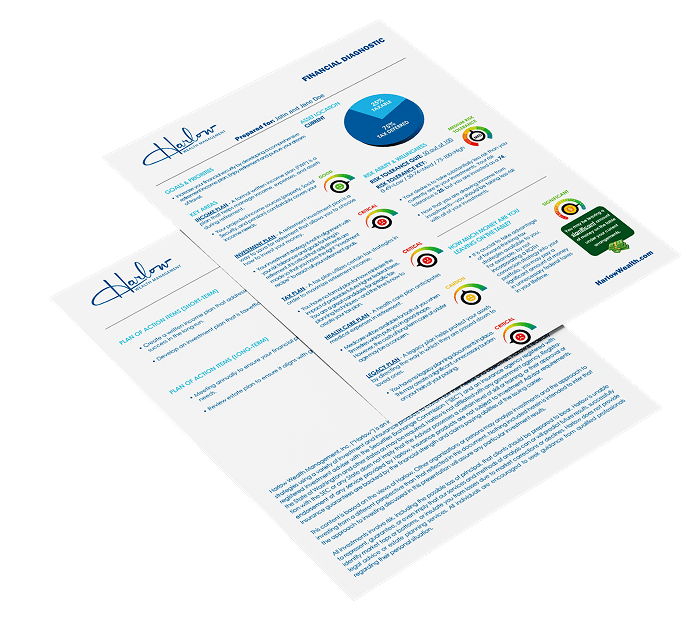
Is Your Retirement Income Built to Last?
Discover potential income gaps, optimize your withdrawal strategy and ensure your money lasts as long as you do.
Claim your complimentary Financial Diagnostic exclusively from Harlow Wealth Management.
Is Your Retirement Income Built to Last?
Discover potential income gaps, optimize your withdrawal strategy and ensure your money lasts as long as you do.
Claim your FREE Financial Diagnostic exclusively from Harlow Wealth Management.