

Inherited an IRA? What Washington and Oregon Families Need to Know Before Spending It
Inherited an IRA? What Washington and Oregon Families Need to Know Before Spending It
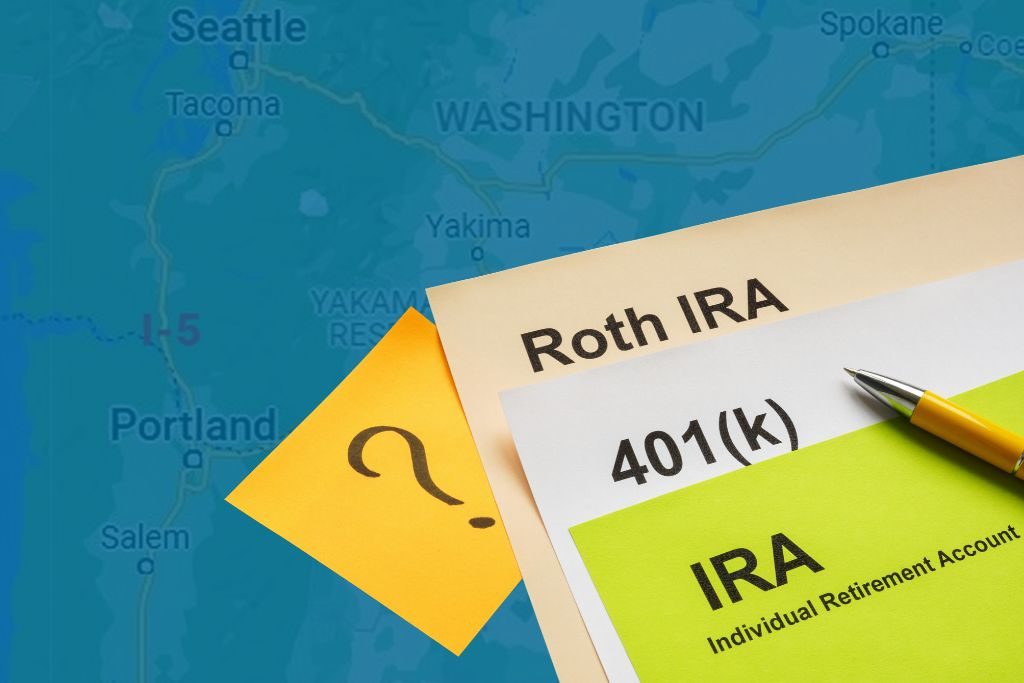
An inherited IRA can arrive during one of the most difficult periods in a family’s life. Along with the loss of a parent, spouse or loved one comes a new set of financial decisions.
Perhaps you are thinking about paying off your mortgage, helping your children buy a home or moving retirement a little closer. Before making those commitments, it helps to understand how much of the account may be available after taxes and when withdrawals are required.
For families in Vancouver, Washington, Portland, Oregon, and throughout the Pacific Northwest, that conversation should include both federal rules and state tax considerations.
Start with the account and your relationship to its owner
The first questions are straightforward: Is this a traditional IRA or a Roth IRA? Who named you as beneficiary? And when did the original owner die?
Surviving spouses generally have options that other beneficiaries do not, including potentially treating the IRA as their own. Certain other beneficiaries, such as qualifying disabled or chronically ill individuals, the owner’s minor child and people not more than 10 years younger than the owner, may qualify for different distribution rules. Accounts inherited following a death before 2020 also require a separate review.1
That means advice your neighbor received after inheriting an IRA may not apply to your situation.
The 10-year rule may come with annual withdrawals
For many adult children inheriting an IRA from a parent who died in 2020 or later, the account must be emptied by December 31 of the tenth year following the year of death. If a parent dies in 2026, that deadline is generally December 31, 2036.2
However, the deadline does not always mean you can wait until the final year.
For beneficiaries subject to the 10-year rule, a traditional IRA generally requires annual required minimum distributions, or RMDs, if the owner died on or after their required beginning date. If the owner died before that date, annual withdrawals generally are not required during years one through nine. 2
Ask the custodian and your tax professional to confirm your annual obligations, final deadline and any remaining distribution obligation for the owner’s year of death.
The statement balance is not your spending budget
Taxable withdrawals from an inherited traditional IRA enter your income for the year. Qualified inherited Roth IRA withdrawals are generally tax-free, although earnings can be taxable if the Roth five-year requirement has not been met.2
Consider a hypothetical Portland household inheriting a $300,000 traditional IRA. Withdrawing the entire balance to pay off a mortgage could add a substantial amount to that year’s taxable income.
The planning question becomes: How much must we withdraw to cover the mortgage and the resulting taxes, and how would that affect our remaining savings?
A smaller withdrawal may fit an immediate need. A schedule over several years may fit a longer-term goal. Neither approach should be chosen from the account balance alone.
Washington and Oregon tax treatment can differ
Oregon families
Oregon generally taxes federally taxable IRA distributions received by residents, subject to applicable state adjustments. A Portland household therefore needs to consider both federal and Oregon income taxes when evaluating an inherited traditional IRA withdrawal.3
If you are already receiving a salary or other retirement income, ask your tax professional to estimate the additional tax attributable to the withdrawal before committing the proceeds to a purchase.
Washington families
For 2026, Washington does not impose a general individual income tax. Its capital gains tax does not apply to transactions through qualifying retirement accounts, including IRAs. Federal tax can still apply to inherited traditional IRA withdrawals. 4,5
However, a plan covering the full inheritance period must look beyond today’s rules. Washington’s Department of Revenue reports that a new income tax begins in 2028 for individuals and married couples filing jointly with annual adjusted gross income exceeding $1 million. Families considering unusually large distributions should have their tax professional review that law’s applicability.5
Families with connections on both sides of the Columbia River
A family might inherit an account from a parent in Portland while living in Vancouver, or receive the inheritance while preparing to relocate.
The location of the parent or financial institution does not, by itself, settle the beneficiary’s income tax treatment. Oregon’s rules distinguish full-year residents, part-year residents and nonresidents. 3
If a move is already part of your plans, include residency and withdrawal timing in the discussion with your tax professional.
A withdrawal may also affect Medicare premiums
For beneficiaries enrolled in Medicare, additional taxable income can affect income-related surcharges for Part B and prescription drug coverage. Social Security generally uses tax information from two years earlier when determining those surcharges.6
A withdrawal made today may therefore have a cost that appears later. Include that possibility when comparing distribution schedules.
Moving the account requires care
A nonspouse beneficiary generally cannot roll an inherited IRA into their own IRA. A properly structured trustee-to-trustee transfer to another inherited IRA may be possible, but taking possession of the money can create a taxable distribution that cannot be rolled back into the inherited account.7
Before signing paperwork, clarify whether you are transferring the account or withdrawing from it.
Withdrawing the money does not mean spending it
The distribution deadline governs when money must leave the IRA. It does not require you to spend the proceeds.
After accounting for taxes, you may choose to save or reinvest money you do not need immediately. Those decisions should reflect your goals, time horizon and comfort with investment risk.
For a family nearing retirement, an inheritance could support future income. For another household, it could help balance debt repayment with maintaining an emergency reserve. Giving the inheritance a purpose can make the withdrawal decisions easier to evaluate.
Questions to answer before spending
Before committing inherited IRA money, work through these questions:
- What beneficiary rules apply to me?
- What must be withdrawn this year, and when must the account be emptied?
- How much of each withdrawal will remain after taxes?
- Could the withdrawal affect my Medicare premiums?
- How does the inheritance fit my retirement income, debt and family goals?
Bring the beneficiary paperwork, recent account statements and tax returns to the conversation.
Your Harlow advisor can help you consider how an inherited IRA fits your broader financial plan, with tax and legal questions addressed by the appropriate professionals. Taking time to understand the account can help you make decisions that reflect both your needs and the legacy behind the inheritance.
This article provides general educational information and is not individualized investment, tax or legal advice. Rules depend on account type, beneficiary status and other circumstances. Information reviewed October 12, 2026.
References
- Internal Revenue Service. (n.d.). Retirement topics: Beneficiary. https://www.irs.gov/retirement-plans/plan-participant-employee/retirement-topics-beneficiary
- Internal Revenue Service. (2026). Publication 590-B (2025), Distributions from individual retirement arrangements (IRAs). https://www.irs.gov/publications/p590b
- Oregon Department of Revenue. (n.d.). Personal income tax. https://www.oregon.gov/dor/programs/individuals/Pages/PIT.aspx
- Washington Department of Revenue. (n.d.). Frequently asked questions about Washington’s capital gains tax. https://dor.wa.gov/taxes-rates/other-taxes/capital-gains-tax/frequently-asked-questions-about-washingtons-capital-gains-tax
- Washington Department of Revenue. (n.d.). Frequently asked questions about income tax. https://dor.wa.gov/taxes-rates/income-tax/frequently-asked-questions-about-income-tax
- Social Security Administration. (2025, December 2). HI 01101.010: Modified adjusted gross income (MAGI). https://secure.ssa.gov/apps10/poms.nsf/lnx/0601101010
- Internal Revenue Service. (2026). Publication 590-A (2025), Contributions to individual retirement arrangements (IRAs). https://www.irs.gov/publications/p590a
Past performance is not indicative of future results. The material above has been provided for informational purposes only and is not intended as legal, tax, or investment advice or a recommendation of any particular security or strategy. The investment strategy and themes discussed herein may be unsuitable for investors depending on their specific investment objectives and financial situation. Information obtained from third-party sources is believed to be reliable though its accuracy is not guaranteed, and Harlow Wealth Management, Inc. (“Harlow”) makes no representation or warranty as to the accuracy or completeness of the information, which should not be used as the basis of any investment decision. Information contained on third party websites that Harlow may link to is not reviewed in their entirety for accuracy, and Harlow assumes no liability for the information contained on these websites. Opinions expressed in this commentary reflect subjective judgments of the author based on conditions at the time of writing and are subject to change without notice. No part of this material may be reproduced in any form, or referred to in any other publication, without express written permission from Harlow. For more information about Harlow, including our Form ADV brochures, please visit https://adviserinfo.sec.gov and search our firm name.

Is Your Retirement Income Built to Last?
Discover potential income gaps, optimize your withdrawal strategy and ensure your money lasts as long as you do.
Claim your complimentary Financial Diagnostic exclusively from Harlow Wealth Management.
Is Your Retirement Income Built to Last?
Discover potential income gaps, optimize your withdrawal strategy and ensure your money lasts as long as you do.
Claim your FREE Financial Diagnostic exclusively from Harlow Wealth Management.