

Downsizing Without Leaving the Pacific Northwest
Downsizing Without Leaving the Pacific Northwest

For many Pacific Northwest retirees, downsizing does not mean leaving behind family, familiar doctors, favorite restaurants, or the landscape that feels like home. It may simply mean exchanging a large house, steep driveway, oversized yard, or growing list of repairs for a home that better supports the next chapter of life.
That distinction matters. AARP’s 2024 Home and Community Preferences Survey found that 75% of adults age 50 and older wanted to remain in their current homes as they aged, while 73% wanted to remain in their communities. At the same time, 44% believed that moving would eventually become necessary.¹
For retirees in Portland, Vancouver, and the surrounding Pacific Northwest, the solution may be to downsize without going very far. However, a smaller home does not automatically produce smaller expenses. Housing prices, taxes, maintenance, healthcare access, and the design of the replacement home all need to be considered.
Downsizing Is About More Than Square Footage
Traditional downsizing is usually described as selling a large home and purchasing a smaller one. In retirement, the more useful definition is broader:
Downsizing means reducing the cost, work, risk, or complexity associated with your home.
That may involve moving from:
- A multistory house to a single-level home
- A large yard to a condominium or townhome
- A rural property to a walkable neighborhood
- An older house to a newer, more efficient home
- A high-cost community to a nearby, more affordable one
- A home far from healthcare to one closer to medical services
- An Oregon residence to a Washington residence, or vice versa
The right move may not produce the smallest house or the lowest purchase price. It should produce a home that is easier to maintain, financially sustainable, and compatible with how you expect to live as you age.
What Does Downsizing Look Like Around Portland and Vancouver?
Housing costs vary considerably across the Portland-Vancouver region.
The U.S. Census Bureau reported the following median values for owner-occupied homes during the 2020–2024 period:²⁻⁷
|
Community |
Median owner-occupied home value |
|
Longview, Washington |
$361,600 |
|
Vancouver, Washington |
$462,400 |
|
Battle Ground, Washington |
$485,100 |
|
Portland, Oregon |
$581,500 |
|
Ridgefield, Washington |
$613,500 |
|
Camas, Washington |
$711,700 |
These figures reveal an important reality: moving farther from Portland does not necessarily mean buying a less expensive home.
Camas and Ridgefield, for example, had higher median owner-occupied home values than both Portland and Vancouver during the measurement period. A retiree selling a Portland home and purchasing a newer single-level home in Camas may improve accessibility and reduce maintenance, but the move might not release much home equity.
Longview may offer lower housing costs, but moving farther north can increase the distance from established physicians, family members, Portland International Airport, cultural activities, and other parts of a retiree’s existing life.
The correct choice depends on what the move is intended to accomplish.
Staying in Portland
Downsizing within Portland can allow retirees to remain close to existing healthcare providers, public transportation, cultural activities, friends, and family.
Portland’s median owner-occupied home value was $581,500 during 2020–2024. Median monthly owner costs were $2,559 for homeowners with a mortgage and $924 for those without one. Median gross rent was $1,655.²
Possible Portland downsizing choices include:
- A condominium in a walkable neighborhood
- A smaller home in Multnomah Village
- A townhome near shops and transit
- A single-level home farther from the city center
- An apartment that eliminates home maintenance
- An accessory dwelling unit located near adult children
Remaining in Portland may make sense for someone who values walkability, public transportation, access to Oregon Health & Science University and other established providers, or proximity to an existing social network.
The tradeoff is that purchasing a smaller home in a desirable Portland neighborhood may not create as much financial savings as expected. Condominium dues, building assessments, insurance costs, and property taxes must also be included in the comparison.
Moving Across the River to Vancouver
Vancouver can allow retirees to remain part of the larger Portland metropolitan area while changing both their housing and state-tax environment.
The median value of an owner-occupied home in Vancouver was $462,400 during 2020–2024, approximately $119,100 below Portland’s median. Vancouver’s median monthly owner cost was $2,035 with a mortgage and $686 without one. Median gross rent was $1,702.³
These are community-wide medians, not direct comparisons of equivalent homes. A newer condominium near the Vancouver Waterfront could cost substantially more than an older house elsewhere in the city.
Nevertheless, Vancouver may appeal to retirees who want:
- Continued access to Portland
- No broad Washington personal income tax before 2028
- A smaller home near the waterfront or downtown
- Access to PeaceHealth Southwest Medical Center
- Proximity to family in Southwest Washington
- Reduced yard and exterior maintenance
- A more manageable home without leaving the metropolitan area
Washington generally does not tax Social Security, pension payments, or distributions from traditional retirement accounts through its capital gains tax. The state’s capital gains tax also exempts direct sales of real estate.⁸ Beginning in 2028, Washington is scheduled to impose a separate 9.9% tax on taxable income above a $1 million standard deduction, making unusually high-income years an additional planning consideration for affluent households.⁹
A move from Portland to Vancouver should therefore be evaluated across several tax years, especially if it will be combined with a home sale, Roth conversion, business transaction, or major investment sale.
Looking North to Battle Ground or Longview
Battle Ground and Longview offer different versions of downsizing.
Battle Ground’s median owner-occupied home value was $485,100 during 2020–2024, slightly higher than Vancouver’s median.⁴ It may appeal to retirees looking for a quieter community, newer housing, and proximity to outdoor recreation while remaining within Clark County.
Longview’s median owner-occupied home value was $361,600, considerably below the medians reported for Vancouver, Portland, Camas, Ridgefield, and Battle Ground.⁵ For someone primarily interested in releasing home equity or reducing the amount committed to a replacement home, Longview may deserve consideration.
However, price should not be the only factor. A lower-cost home may come with:
- Greater distance from family
- Longer trips to specialists
- Reduced public transportation
- Fewer walkable daily destinations
- More driving as the household ages
- Higher maintenance if the home is older
- Less access to established social activities
A home that costs $100,000 less but requires frequent travel to Portland or Vancouver may not deliver the expected improvement in quality of life.
Camas and Ridgefield May Simplify Life Without Reducing Costs
Camas and Ridgefield are attractive communities, but neither should automatically be treated as a budget downsizing destination.
Camas had a median owner-occupied home value of $711,700, while Ridgefield’s was $613,500 during the 2020–2024 period.⁶˒⁷ Both were above the Portland and Vancouver medians.
A move to one of these communities may still be a successful downsizing decision if it provides:
- A newer, more efficient home
- Single-level living
- Less maintenance
- Proximity to children or grandchildren
- A smaller lot
- Better access to desired recreation
- A home designed for aging
- Fewer anticipated repair expenses
This is an example of lifestyle downsizing rather than financial downsizing. The home may be smaller and easier to manage without being less expensive.
Should You Sell or Modify Your Current Home?
Before moving, compare the cost of replacing your current home with the cost of adapting it.
Possible home modifications include:
- Installing a curbless shower
- Adding bathroom grab bars
- Improving exterior lighting
- Replacing stairs with a ramp
- Moving laundry facilities to the main floor
- Widening doorways
- Improving flooring transitions
- Installing lever-style door handles
- Creating a main-floor bedroom
- Reducing landscaping and irrigation needs
- Adding heat pumps or other efficient systems
- Building an accessory dwelling unit for a caregiver or family member
The U.S. Department of Housing and Urban Development defines aging in place as living safely, independently, and comfortably in one’s home and community regardless of age, income, or ability.¹⁰
Modifying an existing home may be preferable when:
- The mortgage is paid off or has a low interest rate
- The home has significant sentimental value
- The neighborhood is highly supportive
- Healthcare, shopping, and family are nearby
- The home can be adapted without major structural work
- Moving would consume a large portion of the expected savings
Moving may be preferable when:
- Essential living spaces are separated by stairs
- The home requires extensive repairs
- The yard has become physically demanding
- Transportation options are limited
- One spouse can no longer safely maintain the property
- The home is far from medical care
- Modification costs would be substantial
- Too much retirement wealth is tied up in the property
The decision should compare the next 10 to 20 years, not merely the first year after the move.
Calculate the Real Amount Released by Downsizing
Suppose a couple sells a mortgage-free home for $750,000 and purchases a smaller residence for $500,000. It may appear that the move releases $250,000.
The actual amount will be lower after accounting for items such as:
- Real estate commissions
- Seller-paid closing costs
- Repairs and preparation
- Moving expenses
- Temporary storage
- Buyer closing costs
- New furniture or appliances
- Immediate renovations
- Condominium initiation fees
- Capital gains taxes, when applicable
If the replacement home needs $35,000 in accessibility improvements and the transaction costs consume another significant portion of the difference, the usable proceeds may be substantially less than expected.
That does not make the move unsuccessful. A more accessible home with lower upkeep may still improve retirement. It simply means the decision should not be based on sale price minus purchase price alone.
Consider the Tax Consequences of Selling
Federal home-sale exclusion
A homeowner may qualify to exclude up to $250,000 of gain from the sale of a principal residence, or up to $500,000 for a married couple filing jointly, if federal ownership and use requirements are met.¹¹
The exclusion applies to the gain, not the total sale price. The home’s adjusted basis, eligible improvements, selling expenses, ownership history, and prior use all affect the calculation.
Washington treatment
Washington’s capital gains tax excludes direct sales of real estate.⁸ A Vancouver homeowner may still face federal tax, but the sale itself is not generally subject to Washington’s capital gains tax.
Oregon treatment
Oregon generally begins with federal taxable income and taxes taxable capital gains as part of its personal income-tax system. A qualifying federal home-sale exclusion can therefore be important to an Oregon homeowner. Oregon-source gains from Oregon real estate can also remain taxable after an owner moves to another state.¹²
Before listing the home, gather documentation for major improvements such as additions, remodeling, roofing, HVAC systems, accessibility improvements, and other work that may affect the property’s adjusted basis.
Property-Tax Relief May Change the Decision
Selling is not the only way to reduce housing pressure.
Washington offers property-tax exemption and deferral programs for qualifying senior citizens, people retired because of disability, and certain veterans with disabilities. Eligibility depends on age or disability, ownership, occupancy, and county-specific income thresholds.¹³
Oregon does not offer a statewide property-tax exemption based solely on age and income. However, qualifying disabled or senior homeowners may apply to defer property taxes. The 2026 household-income limit for Oregon’s Senior and Disabled Property Tax Deferral Program is $70,000. Deferred taxes generally become a lien against the property and must eventually be repaid.¹⁴
A homeowner considering downsizing primarily because of property taxes should investigate these programs before selling. An exemption or deferral will not solve maintenance, accessibility, or isolation concerns, but it may change the financial calculation.
Renting Can Be a Legitimate Downsizing Strategy
Some retirees resist renting because they associate homeownership with financial security. In certain situations, however, renting can reduce responsibility and provide flexibility.
Renting may eliminate or reduce:
- Large repair expenses
- Exterior maintenance
- Yard work
- Property taxes
- Homeowners association assessments
- The need to keep substantial cash available for repairs
It can also allow a retiree to test a community before purchasing.
The risks include rent increases, less control over the property, possible relocation, restrictions on modifications, and the absence of future home appreciation.
In Portland, median gross rent was $1,655 during 2020–2024. Vancouver’s median was slightly higher at $1,702.²˒³ These figures cover all rental types and should not be interpreted as the likely rent for a particular retirement-quality apartment.
The financial comparison should include the expected return and purpose of any home equity released by selling. Spending the proceeds without a long-term income plan can turn an initially comfortable rental strategy into a future cash-flow problem.
Choose the Community Before Choosing the House
The replacement home may be perfect today but poorly located for life at 75, 80, or 85.
Before purchasing, evaluate:
- Distance to primary and specialty healthcare
- Availability of public or senior transportation
- Walkability
- Grocery and pharmacy access
- Proximity to family and friends
- Stairs between the home and street
- Winter weather and road conditions
- Wildfire and smoke exposure
- Flood and earthquake risk
- Insurance availability and cost
- Homeowners association rules
- Opportunities for recreation and social connection
- Access to in-home care providers
- Distance to an airport
- The ability to remain in the home if driving becomes difficult
A slightly more expensive home near services may ultimately be safer and less costly than an isolated property that requires constant driving.
A Pacific Northwest Downsizing Checklist
Before deciding whether and where to move, ask:
- What problem are we trying to solve?
- Do we want to reduce costs, maintenance, physical risk, or all three?
- How much equity will remain after every transaction expense?
- Will the replacement home require renovations?
- Are its essential rooms on one level?
- What are the property taxes, insurance costs, and association dues?
- How would moving between Oregon and Washington affect our taxes?
- Will we remain close to family, doctors, and friends?
- Could we remain there if one of us stopped driving?
- Does the move improve our monthly retirement cash flow?
- Would modifying our current home be more effective?
- How will the released home equity be invested or used?
- What happens if one spouse dies or needs long-term care?
- Is this a home we can manage 10 or 20 years from now?
The Goal Is a More Sustainable Retirement
Downsizing does not have to mean leaving the Pacific Northwest or giving up the life you have built here.
It may mean moving from Portland to Vancouver, from Vancouver to Longview, or from a large suburban house to a condominium a few blocks away. It may also mean staying exactly where you are and using part of your home equity to make the property safer and easier to maintain.
The best downsizing decision is not necessarily the move that produces the largest check at closing. It is the one that places housing, taxes, healthcare, transportation, and quality of life on a more sustainable path.
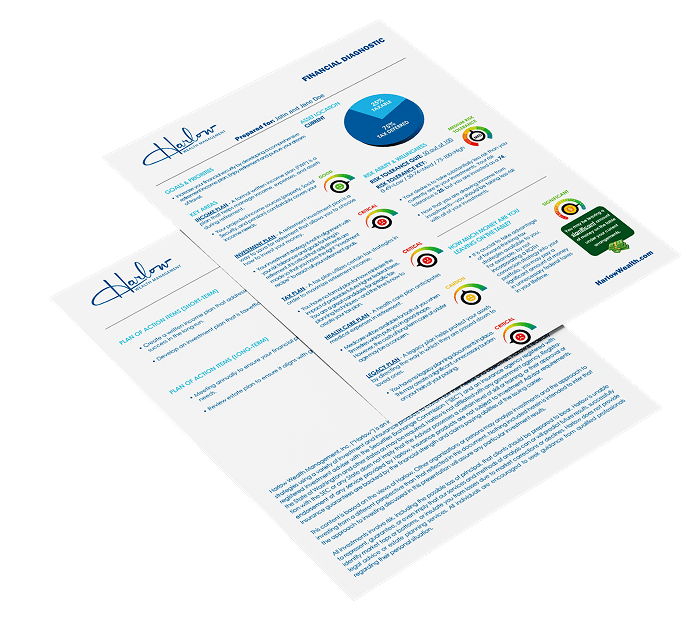
At Harlow Wealth Management, our proprietary Financial Diagnostic examines how income, investments, taxes, healthcare, and legacy planning work together. Before selling a longtime home or purchasing the next one, it can help reveal how the decision may affect your retirement income, tax exposure, available reserves, and long-term flexibility.
Because the right-sized home should support the retirement you want, not limit it.
This article is intended for general educational purposes and should not be interpreted as individualized tax, legal, real estate, or investment advice. Consult qualified professionals regarding your circumstances.
References
-
- AARP. (2024, December 10). AARP survey: Older adults want to stay in home, community. https://www.aarp.org/home-living/home-community-preferences-survey-2024/
- U.S. Census Bureau. (n.d.). QuickFacts: Portland city, Oregon. Retrieved September 22, 2026, from https://www.census.gov/quickfacts/fact/table/portlandcityoregon/INC910224
- U.S. Census Bureau. (n.d.). QuickFacts: Vancouver city, Washington. Retrieved September 22, 2026, from https://www.census.gov/quickfacts/fact/table/vancouvercitywashington/PST045225
- U.S. Census Bureau. (n.d.). QuickFacts: Battle Ground city, Washington. Retrieved September 22, 2026, from https://www.census.gov/quickfacts/fact/table/battlegroundcitywashington/HSD410223
- U.S. Census Bureau. (n.d.). QuickFacts: Longview city, Washington. Retrieved September 22, 2026, from https://www.census.gov/quickfacts/fact/table/longviewcitywashington/IPE120223
- U.S. Census Bureau. (n.d.). QuickFacts: Camas city, Washington. Retrieved September 22, 2026, from https://www.census.gov/quickfacts/fact/table/camascitywashington/BZA010222
- U.S. Census Bureau. (n.d.). QuickFacts: Ridgefield city, Washington. Retrieved September 22, 2026, from https://www.census.gov/quickfacts/fact/table/ridgefieldcitywashington/HSG860223
- Washington State Department of Revenue. (n.d.). Frequently asked questions about Washington’s capital gains tax. Retrieved September 22, 2026, from https://dor.wa.gov/taxes-rates/other-taxes/capital-gains-tax/frequently-asked-questions-about-washingtons-capital-gains-tax
- Washington State Legislature. (2026). RCW 82A.04.030: Tax imposed—Rates. https://app.leg.wa.gov/RCW/default.aspx?cite=82A.04.030
- U.S. Department of Housing and Urban Development. (2024). Evidence-based actions to help HUD-assisted older adults remain healthy and age in their community. https://www.huduser.gov/portal/publications/Evidence-Based-Actions-to-Help-HUD-Assisted-Older-Adults-Remain-Healthy-and-Age-in-Their-Community.html
- Internal Revenue Service. (2025). Sale of your home. https://www.irs.gov/taxtopics/tc701
- Oregon Department of Revenue. (2025). 2026 Oregon estimated income tax instructions (Publication OR-ESTIMATE, 150-101-026). https://www.oregon.gov/dor/forms/FormsPubs/publication-or-estimate_101-026_2026.pdf
- Washington State Department of Revenue. (n.d.). Property tax exemption for seniors, people retired due to disability, and veterans with disabilities. Retrieved September 22, 2026, from https://dor.wa.gov/taxes-rates/property-tax/property-tax-exemption-seniors-people-retired-due-disability-and-veterans-disabilities
- Oregon Department of Revenue. (n.d.). Property tax deferral for disabled and senior homeowners. Retrieved September 22, 2026, from https://www.oregon.gov/dor/programs/property/pages/senior-and-disabled-property-tax-deferral-program.aspx
Past performance is not indicative of future results. The material above has been provided for informational purposes only and is not intended as legal, tax, or investment advice or a recommendation of any particular security or strategy. The investment strategy and themes discussed herein may be unsuitable for investors depending on their specific investment objectives and financial situation. Information obtained from third-party sources is believed to be reliable though its accuracy is not guaranteed, and Harlow Wealth Management, Inc. (“Harlow”) makes no representation or warranty as to the accuracy or completeness of the information, which should not be used as the basis of any investment decision. Information contained on third party websites that Harlow may link to is not reviewed in their entirety for accuracy, and Harlow assumes no liability for the information contained on these websites. Opinions expressed in this commentary reflect subjective judgments of the author based on conditions at the time of writing and are subject to change without notice. No part of this material may be reproduced in any form, or referred to in any other publication, without express written permission from Harlow. For more information about Harlow, including our Form ADV brochures, please visit https://adviserinfo.sec.gov and search our firm name.
Is Your Retirement Income Built to Last?
Discover potential income gaps, optimize your withdrawal strategy and ensure your money lasts as long as you do.
Claim your complimentary Financial Diagnostic exclusively from Harlow Wealth Management.
Is Your Retirement Income Built to Last?
Discover potential income gaps, optimize your withdrawal strategy and ensure your money lasts as long as you do.
Claim your FREE Financial Diagnostic exclusively from Harlow Wealth Management.