

Should You Move Closer to Your Grandchildren in Retirement? A Guide for Pacific Northwest Retirees
Should You Move Closer to Your Grandchildren in Retirement? A Guide for Pacific Northwest Retirees

For many retirees, grandchildren can change the meaning of home.
A couple may have spent decades building a life in Portland or Vancouver, surrounded by familiar doctors, longtime friends, favorite neighborhoods, and the unmistakable beauty of the Pacific Northwest. Then grandchildren arrive in another city or state, and suddenly living closer to family begins to feel more important than staying rooted in the place they know.
The emotional appeal is easy to understand. Living nearby can mean ordinary Tuesday dinners instead of holiday-only visits. Grandparents can attend school performances, help with childcare, and become part of their grandchildren’s daily lives.
But moving closer to family is also a major financial and lifestyle decision. It can affect housing costs, taxes, healthcare, transportation, estate planning, and the stability of a retirement income plan.
Before leaving the Pacific Northwest, consider not only what you are moving toward, but also what you may be giving up.
Many Grandparents Already Live Far From Their Families
Families are increasingly spread across the country. AARP research found that more than half of grandparents had at least one grandchild living more than 200 miles away. Approximately one-third lived more than 50 miles from their closest grandchild.¹
Older adults do move, but interstate relocation is less common than moving nearby. U.S. Census Bureau research found that approximately 6.2% of adults age 65 and older moved during a typical year from 2015 through 2019. About 58% of those moves remained within the same county, while approximately 19.7% crossed state lines.²
Leaving Oregon or Washington to be closer to grandchildren is therefore a more consequential decision than moving across town. It can change nearly every part of a retiree’s financial and social environment.
Begin With the Reason for Moving
“Being closer to the grandchildren” can mean different things to different families.
One couple may want to provide regular childcare. Another may want to attend birthdays and school events without boarding an airplane. A single retiree may be thinking beyond today and recognizing that living near adult children could provide a support system later in life.
Before evaluating houses or tax rates, define what you hope the move will accomplish.
Ask:
- How often do we expect to see the grandchildren?
- Are we moving primarily for relationships, childcare, or future support?
- Do our adult children expect to remain in the area?
- Would we still choose this community if they moved again?
- Does each spouse feel equally comfortable moving?
- Are we prepared to rebuild our social life?
- Are we expecting more family involvement than our children anticipate?
- Would living one hour away provide the same benefit as living five minutes away?
A successful move requires shared expectations. Proximity alone does not guarantee time together.
Understand What You Are Leaving Behind
For Pacific Northwest retirees, moving away may mean leaving more than a house.
It can mean giving up:
- Established physicians and specialists
- Longtime friendships
- Familiar neighborhoods
- Community and volunteer connections
- Proximity to the Oregon Coast, Columbia River Gorge, or Cascade Mountains
- A favorable mortgage or a paid-off home
- Knowledge of local services and transportation
- A climate and lifestyle that feel like home
- Access to adult children or other relatives who remain in the region
AARP’s 2024 Home and Community Preferences Survey found that 75% of adults age 50 and older wanted to remain in their homes as they aged, while 73% wanted to remain in their communities. At the same time, 44% expected that they might eventually relocate.³
That tension is familiar to many retirees. They value the life they have built, but they also recognize that family relationships and future support may be pulling them elsewhere.
Compare Housing Markets Carefully
A Pacific Northwest homeowner may have accumulated substantial home equity. Whether that equity improves the retirement plan depends heavily on the cost of the destination.
From 2020 through 2024, the median value of an owner-occupied home was approximately:
- $581,500 in Portland
- $462,400 in Vancouver⁴˒⁵
Selling a Portland or Vancouver home and moving to a lower-cost community could release equity for retirement income, healthcare, travel, or legacy goals.
Moving to a more expensive market may require the opposite. A retiree could sell a paid-off Pacific Northwest home and still need a mortgage to purchase a comparable residence near the grandchildren.
Do not compare home prices alone. Compare the complete cost of living in each location:
- Property taxes
- Homeowners insurance
- Utilities
- Homeowners association dues
- Maintenance
- Transportation
- Sales and income taxes
- Healthcare costs
- Long-term care
- Travel back to the Pacific Northwest
- The cost of adapting the new home for aging
A smaller house is not necessarily a less expensive retirement home.
Do Not Treat All Home Equity as Spendable
The difference between the sale price of your current home and the purchase price of the next home is not the amount available for retirement.
Moving may involve:
- Real estate commissions
- Seller closing costs
- Repairs and preparation
- Buyer closing costs
- Moving and storage
- Temporary housing
- New furnishings
- Accessibility improvements
- Property taxes and insurance
- Capital gains taxes, when applicable
- Travel between the two locations
- The cost of maintaining two homes temporarily
Federal law may allow qualifying homeowners to exclude up to $250,000 of gain from the sale of a principal residence, or up to $500,000 for qualifying married couples filing jointly. Ownership, use, prior exclusions, and other requirements apply.⁶
The exclusion applies to the gain, not the total sale price. Retirees should calculate the property’s adjusted basis and estimated net proceeds before deciding how much house they can afford in the new location.
Compare the Tax Systems, Not Just the Income-Tax Rate
Moving out of Oregon or Washington can change several kinds of taxes.
The comparison may include:
- Personal income taxes
- Taxation of pension income
- Taxation of IRA and 401(k) withdrawals
- Social Security taxation
- Capital gains taxes
- Property taxes
- Sales taxes
- Estate or inheritance taxes
- Local income taxes
Oregon and Washington already provide a useful example of how different state systems can be. Oregon imposes a broad personal income tax, while Washington relies more heavily on sales, property, and other taxes and imposes taxes on certain large capital gains. Washington is also scheduled to implement a separate tax on taxable income above a $1 million standard deduction beginning in 2028.⁷
A state described as “tax-friendly” may have high property taxes, insurance costs, sales taxes, or healthcare expenses. Another state may tax retirement income but offer less expensive housing.
The appropriate comparison is the household’s estimated total tax burden, based on its actual income and assets.
Review Healthcare Before You Move
Healthcare should be investigated before selecting a neighborhood or making an offer on a home.
A retiree leaving Portland or Vancouver may also be leaving established relationships with physicians, specialists, pharmacies, and health systems. The new community may have different provider availability, hospital quality, wait times, and long-term care options.
Questions to ask include:
- Are preferred doctors accepting new patients?
- Is there a major medical center nearby?
- How far away are specialists?
- Are current prescriptions covered?
- Is the Medicare Advantage plan available in the new county?
- Will the move create an opportunity or requirement to change coverage?
- What are the local assisted-living and home-care options?
- Can the community support both spouses if their healthcare needs diverge?
Moving can create a Medicare Special Enrollment Period that allows qualifying beneficiaries to change Medicare Advantage or prescription drug coverage. The available changes and timing depend on the circumstances of the move.⁸
Do not assume Medicare coverage will work identically in another county or state, particularly when enrolled in a Medicare Advantage plan with a defined provider network.
Consider the Financial Value of Being Nearby
Moving closer to family can create expenses, but it may also reduce others.
Potential savings include:
- Fewer flights
- Less hotel spending
- Reduced rental-car expenses
- Less holiday travel
- Shared childcare and family resources
- Help with errands or transportation later in life
- Informal support that delays paid caregiving
- Less need to maintain guest accommodations
The emotional value may be even greater. Being present for ordinary moments can be difficult to measure in dollars.
However, informal family support should not replace a long-term care plan. Adult children may be balancing careers, children, financial obligations, and their own health. A retirement plan should not assume that family members will be available to provide extensive care unless everyone has discussed and accepted that expectation.
Talk About Childcare Before You Move
Grandparents sometimes imagine that moving closer will naturally produce more time with grandchildren. Adult children may imagine that nearby grandparents will provide regular childcare.
Neither assumption should go unspoken.
Discuss:
- How often you expect to visit
- Whether childcare will be regular or occasional
- School pickup and transportation
- Overnight care
- Family vacations
- Financial support
- Holiday expectations
- Personal boundaries
- What happens if your health changes
Moving hundreds or thousands of miles based on an undefined family role can create disappointment on both sides.
The objective is not to make the relationship transactional. It is to make sure everyone is imagining a compatible version of life after the move.
What If Your Children Move Again?
Adult children may relocate because of careers, housing, relationships, or educational opportunities. A move that places you 10 minutes from the grandchildren today could leave you several states apart again five years from now.
Before buying, ask:
Would we still want to live there if our family moved?
Evaluate the destination as an independent retirement community:
- Do you like the climate?
- Can you afford it?
- Are there activities you enjoy?
- Is healthcare accessible?
- Can you make friends there?
- Does the home work for aging?
- Is transportation available if you stop driving?
- Would the community still feel fulfilling without your children nearby?
If the answer is no, renting first may be safer than immediately purchasing a home.
Consider a Trial Period
A temporary move can test the idea before making it permanent.
Possible approaches include:
- Renting for six months or one year
- Spending an entire season near the grandchildren
- Keeping the Pacific Northwest home temporarily
- Using a furnished rental
- Alternating extended visits
- Renting near family before purchasing
- Trying the destination during its least appealing season
A sunny two-week visit may not reveal summer heat, winter weather, traffic, healthcare access, or the everyday rhythm of the community.
A trial period can answer practical questions while preserving flexibility. The additional expense may be worthwhile if it prevents an unsuitable permanent move.
Could You Keep a Pacific Northwest Home Base?
Some retirees may be able to divide time between two locations. This can preserve Northwest relationships while creating more time with grandchildren.
But maintaining two homes adds complexity:
- Duplicate housing expenses
- Insurance considerations
- Property maintenance
- Travel costs
- Residency and domicile questions
- State tax filing requirements
- Security while a property is vacant
- Medical-provider coordination
- Additional belongings and vehicles
Seasonal living can work, but it should be modeled as a long-term expense rather than treated as an extended vacation.
Residency is also more than counting days. States may consider the location of your permanent home, driver’s license, voter registration, professional relationships, financial accounts, and personal connections when determining domicile.
One Spouse May Be More Ready Than the Other
A move closer to grandchildren may feel essential to one spouse and deeply disruptive to the other.
One partner may see daily family life. The other may see the loss of friends, favorite activities, and independence. One may be comfortable rebuilding socially, while the other relies heavily on established relationships.
Questions couples should discuss include:
- Whose family are we moving closer to?
- What relationships will each person leave behind?
- Will one spouse become more dependent on the other?
- Does the destination support both partners’ interests?
- What happens if the adult child relationship becomes strained?
- Would a smaller move or extended visits provide a compromise?
The financial plan cannot resolve every emotional concern, but it can reveal whether the household has enough flexibility to test different options.
Protect Your Retirement From Generosity
Living near grandchildren can make it easier to spend money on them.
AARP research has found that grandparents provide substantial financial support to grandchildren, including spending on gifts, education, everyday expenses, and childcare.⁹
Generosity can be meaningful, but it should fit within the retirement plan.
Potential expenses include:
- Childcare
- School tuition
- College savings
- Family vacations
- Vehicles
- Home down payments
- Medical expenses
- Activities and sports
- Frequent meals and entertainment
- Regular financial assistance to adult children
Decide in advance what level of support is sustainable. A grandparent should not jeopardize retirement security to become the family’s default source of funding.
Build a Side-by-Side Financial Comparison
Before moving, compare staying in the Pacific Northwest with relocating closer to family.
|
Financial consideration |
Stay in Portland or Vancouver |
Move closer to grandchildren |
|
Housing |
Current mortgage, taxes and maintenance |
Purchase or rent, closing and moving costs |
|
Taxes |
Current Oregon or Washington treatment |
New state and local tax system |
|
Healthcare |
Established providers and coverage |
New providers, plans and networks |
|
Travel |
More trips to see family |
More trips back to the Northwest |
|
Support |
Existing friends and community |
Greater family proximity |
|
Home equity |
Remains invested in current home |
May increase or decrease after the move |
|
Long-term care |
Existing local options |
Potential family support and new care market |
|
Lifestyle |
Familiar activities and climate |
New community and routines |
|
Flexibility |
Known environment |
Risk that adult children relocate again |
The comparison should include at least 10 years of projected costs. A move that appears affordable during the first year may look different after property-tax increases, insurance costs, healthcare changes, or the loss of a spouse.
Questions to Ask Before Moving
Before leaving the Pacific Northwest, ask:
- What do we hope to gain from living closer?
- Have we discussed expectations with our adult children?
- Would we choose the destination without family there?
- Can we afford comparable housing?
- How much net equity will remain after the move?
- How will taxes change?
- Will our Medicare and healthcare options change?
- Are suitable doctors and hospitals nearby?
- What relationships and activities will we leave behind?
- Does each spouse support the move?
- What happens if our children relocate again?
- Could we rent before purchasing?
- Would seasonal living accomplish the same goal?
- How much financial support do we expect to provide?
- Will the new home work if our mobility or health changes?
- Does the move strengthen or weaken our retirement plan?
The Best Move Balances Family and Financial Security
Moving closer to grandchildren can be one of the most rewarding decisions in retirement. It can transform a long-distance relationship into a shared everyday life and create meaningful memories across generations.
But the decision should not be based solely on emotion, home prices, or state income-tax rates. It should account for housing, healthcare, taxes, relationships, lifestyle, and the possibility that circumstances may change.
For some Pacific Northwest retirees, the right choice will be moving. For others, it may be extended visits, seasonal living, or remaining in Portland or Vancouver with a larger travel budget.
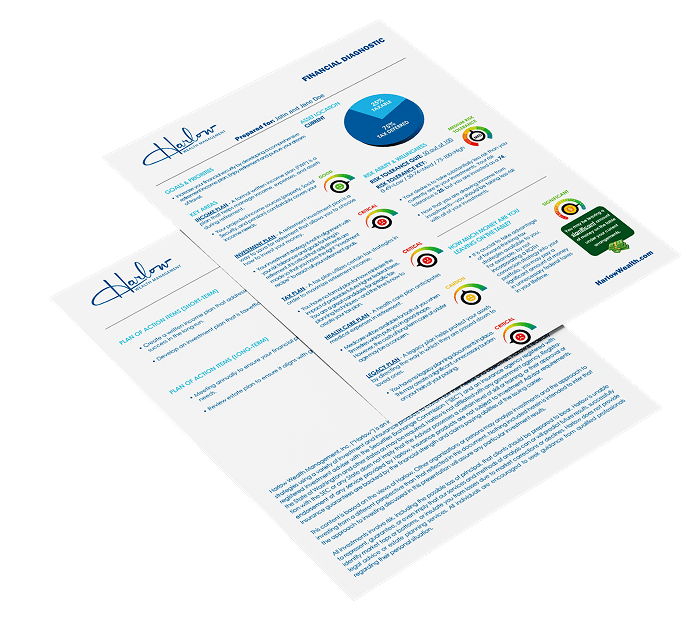
At Harlow Wealth Management, our proprietary Financial Diagnostic examines how income, investments, taxes, healthcare, and legacy planning work together. Before making a major retirement move, the process can help clarify how the decision may affect your cash flow, home equity, tax exposure, healthcare options, and long-term flexibility.
The goal is not simply to live closer. It is to create a retirement that keeps family close without placing your financial independence at risk.
This article is intended for general educational purposes and should not be interpreted as individualized tax, legal, healthcare, real estate, or investment advice. Consult qualified professionals regarding your circumstances.
References
-
-
-
-
- AARP. (2019). Insights and spending habits of modern grandparents. https://www.aarp.org/pri/topics/social-leisure/relationships/grandparenting-survey/ aarp.org
- U.S. Census Bureau. (2022, September 22). Census Bureau releases report on older Americans’ moving patterns. https://www.census.gov/newsroom/press-releases/2022/older-americans-moving-patterns.html census.gov
- AARP. (2024, December 10). New AARP report: Majority of adults 50-plus want to age in place, but policies and communities must catch up. https://www.aarp.org/press/releases/2024-12-10-new-aarp-report-majority-adults-50-plus-age-place-policies-communities-catch-up.html aarp.org
- U.S. Census Bureau. (n.d.). QuickFacts: Portland city, Oregon. Retrieved September 28, 2026, from https://www.census.gov/quickfacts/fact/table/portlandcityoregon/INC910224 census.gov
- U.S. Census Bureau. (n.d.). QuickFacts: Vancouver city, Washington. Retrieved September 28, 2026, from https://www.census.gov/quickfacts/fact/table/vancouvercitywashington/PST120224 census.gov
- Internal Revenue Service. (2025). Publication 523: Selling your home. https://www.irs.gov/publications/p523
- Washington State Legislature. (2026). RCW 82A.04.030: Tax imposed—Rates. https://app.leg.wa.gov/RCW/default.aspx?cite=82A.04.030
- Centers for Medicare & Medicaid Services. (n.d.). Special Enrollment Periods. Retrieved September 28, 2026, from https://www.medicare.gov/basics/get-started-with-medicare/get-more-coverage/joining-a-plan/special-enrollment-periods medicare.gov
- AARP. (2026, June 16). Grandparents provide billions in unpaid care of grandkids. https://www.aarp.org/caregiving/financial-legal/grandparents-report-2026/
-
-
-
Past performance is not indicative of future results. The material above has been provided for informational purposes only and is not intended as legal, tax, or investment advice or a recommendation of any particular security or strategy. The investment strategy and themes discussed herein may be unsuitable for investors depending on their specific investment objectives and financial situation. Information obtained from third-party sources is believed to be reliable though its accuracy is not guaranteed, and Harlow Wealth Management, Inc. (“Harlow”) makes no representation or warranty as to the accuracy or completeness of the information, which should not be used as the basis of any investment decision. Information contained on third party websites that Harlow may link to is not reviewed in their entirety for accuracy, and Harlow assumes no liability for the information contained on these websites. Opinions expressed in this commentary reflect subjective judgments of the author based on conditions at the time of writing and are subject to change without notice. No part of this material may be reproduced in any form, or referred to in any other publication, without express written permission from Harlow. For more information about Harlow, including our Form ADV brochures, please visit https://adviserinfo.sec.gov and search our firm name.
Is Your Retirement Income Built to Last?
Discover potential income gaps, optimize your withdrawal strategy and ensure your money lasts as long as you do.
Claim your complimentary Financial Diagnostic exclusively from Harlow Wealth Management.
Is Your Retirement Income Built to Last?
Discover potential income gaps, optimize your withdrawal strategy and ensure your money lasts as long as you do.
Claim your FREE Financial Diagnostic exclusively from Harlow Wealth Management.